


Book Recommendation: "How to Manage Your Home Without Losing Your Mind" by Dana K White
- Neralie Cain

- Feb 3
- 3 min read
Updated: Feb 9
Managing a home can feel relentlessly overwhelming, especially when clutter builds up and routines never seem to stick. You may be surprised to hear how often this comes up in the therapy room, with many individuals feeling embarrassed, overwhelmed, stressed, frustrated, and/or hopeless about the state of their homes. How to Manage Your Home Without Losing Your Mind by Dana K. White offers a compassionate, practical approach that focuses on progress, not perfection, and focuses on building new habits one small step at a time.

Less Is Better
One of the most powerful ideas in this book is that even a small reduction in clutter is meaningful progress. You don’t need to declutter an entire room for it to “count.” Removing a few items, clearing one surface, or making a space slightly more functional is movement in the right direction. Less stuff means fewer decisions, less visual noise, and a lighter mental load, even if the space still isn’t "perfect".
Procrasti-Clutter
Dana K. White also introduces the idea of procrasti-clutter, which she defines as items that don’t register as clutter because they’re “just waiting” to be moved somewhere else. Think:
folded laundry sitting on the kitchen table
clean dishes left in the dish drainer
piles of items waiting to be put away
These tasks are usually quick, but because we don’t label them as clutter, they don’t feel urgent. The book highlights how returning these items to their “home” can quickly reduce chaos with relatively little effort. Over time, if we start to recognise items that will become procrasti-clutter and put them away immediately, we avoid procrasti-clutter building up in the first place.

Routines That Actually Fit Real Life
Rather than rigid schedules, Dana encourages simple, sustainable routines that work even on low-energy days. A key example is dealing with dishes every evening, either washing them or at least turning on the dishwasher, so you wake up to a clearer kitchen the next day.
These routines:
reduce carry-over stress from one day to the next
lower the daily cognitive load
support consistency without relying on motivation
She also rightly points out that "dishes math" means that doing one day's worth of dishes somehow takes a fraction of the time of doing two day's worth of dishes, and a small task is much easier to fit into a busy schedule than a big one. The focus is on habits that make tomorrow easier.
Clinical Reflection: Why This Matters for Mental Health
From a mental health perspective, this approach is incredibly supportive. Overwhelm, anxiety, burnout, and executive functioning difficulties are often intensified by clutter and unfinished tasks, but people who have these mental health struggles also are less likely to feel like they can manage these everyday household tasks.
This book:
challenges all-or-nothing thinking
reduces shame around “not keeping up”
supports nervous system regulation through predictability and reduced visual overload
promotes self-compassion and realistic expectations
Small, repeatable actions help build a sense of control and agency, which is protective for mental health.
Final Thoughts
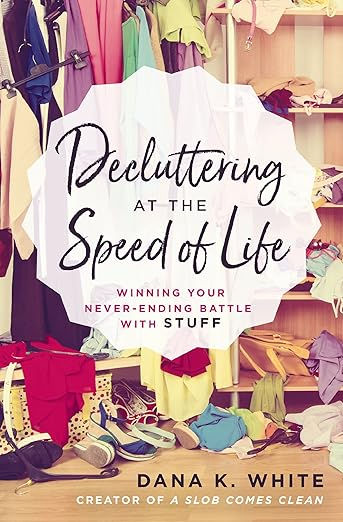
If you’re feeling overwhelmed by the day-to-day running of your home, this book offers a kind, doable starting point. And if you feel on top of daily tasks like dishes and laundry but are still drowning in clutter, you may prefer Dana K. White’s other book, Decluttering at the Speed of Life, which goes deeper into decluttering strategies in more detail. Both books are practical, validating, and refreshingly human.


Comments